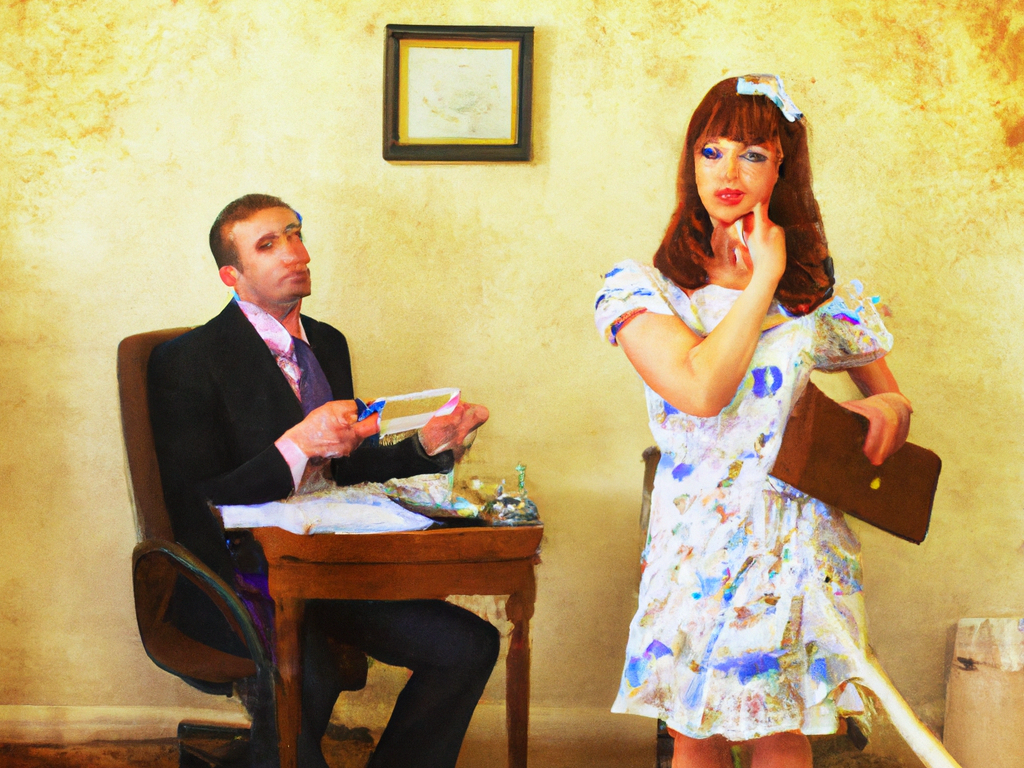

Pauline is at the office Christmas party, another dreary year almost over and 1971 getting ready to deliver more of the same. She is perched on a bar stool with her best blue handbag on her knee, feeling too old to be here in the midst of this cheery young person’s noise and merriment.
Pauline is the office cleaner who dusts and sweeps and empties the bins before anyone arrives so the office is miraculously clean when they get there and no one thinks to ask who does it. Pauline also pushes around the metal tea trolley three times a day. On the top shelf is an urn of strong tea and a plate of plain biscuits, while the bottom shelf bears iced fancies and a jar of instant coffee for the directors. People only ever choose the coffee once because Pauline does not know how to make it or what it should taste like, and no one puts her right because even here they do not notice her.
You could stand your spoon up in this
Puts hairs on your chest
Girls too?
Ha ha ha ha
I’ll have that biscuit if you don’t want it
Here y’are
It is the same tonight; Pauline has come out of a sense of loyalty and as usual she may as well be invisible, so she sits watching the shenanigans ramp up while the alcohol slides down. The Boss is wearing his sociable face as he shepherds his secretary past Pauline towards the door. We should get you home, he is saying, in a voice slightly too loud to be private. He smiles his light smile and slides his hand around the small of the girl’s back; decorous, not quite touching. In the process, he moves closer to her and she raises her arms in a modest fold across her breasts. I’ll give you a lift. Again the voice just a smidgen too loud. He manoeuvres her in the direction of the exit; graceful, elegant, tolerantly concerned about this inebriated young woman. He smiles and rolls his eyes knowingly in the direction of the flutter of payroll clerks and telephonists watching from their stations near the bar. Office parties, he seems to say, just a little too much for some. They smirk knowingly back; they saw him mixing the vodkas and gin martinis for her but somehow the getting drunk part is her fault so she is fair game. They snigger about Mr Littman ‘getting his leg over’, and make leery remarks about how she is in for a ‘right old banging’ tonight. But not within earshot, that would not be clever, not with the likes of him.
They do not know the half of it. Mr Littman has a brand of expertise that is apparent only to a chosen few and they do not tell. He does make mistakes though. Pauline once saw the girl’s eye, purple and puffed out, and she stowed the image, without looking too closely at the who and the why of it, in her mental catalogue of observations. There were others in there such as the girl’s nickname, Fat Mo, earned when she ballooned out and took to walking hunched to keep her newly copious breasts hidden from oglers, and out of reach of the sly hands of office boys. Perhaps that accounted for her watchful vigilance, her habit of casting her eyes to the floor whenever a man spoke to her, and how she guarded her body. There was also the way she sank into a kind of blank no-man’s-land whenever Mr Littman appeared, and how sometimes she jumped at nothing-noises or did not sit straight on her chair.
Pauline saw all this and shrugged it into a corner of her mind. It was not her problem – Mo was no better than she should be and most likely brought it on herself. Pauline knows this thought is a convenience, but conveniences let you get on with things and mind your own business, so she allows it to paper over the crack she has poked the girl into and where illumination may not be convenient at all.
Pauline watches Mr Littman herd his charge out of the door and she tries to smile a quick merry Christmas Mo with her. But there is nothing Christmassy in Mo’s face so Pauline looks away and fidgets with her bag. She is waiting for a good time to make her escape and rehearsing a suitable parting remark in case anyone notices – Ah well, best be getting home. Merry Christmas all. She clicks open the catch and rummages for her return bus ticket, coming across a piece of time softened card in the process. She should throw that away, that old thing, but not now and not here. She puts it in her coat pocket out of the way and feels around again in the bag for the ticket. There it is. She puts this in her pocket too, shuts her bag and gets up to leave. No one says goodnight.
At home, Bert has the kettle on. ‘Cup of tea, love?’ He scratches his nose, rubs the sandpaper stubble on his chin, and wafts his hand in the direction of the kettle.
‘Ooh, yes please, love.’ Pauline eases her brown plastic, stubby-heeled shoes off her pinched feet, and perches them on the little stand by the back door.
‘How was it? Usual goings-on, I suppose?’ Bert leans against the door frame, he is angling for titillating tales of indiscriminate groping. Bosses, secretaries, booze, a dollop of Christmas spirit and all that. He hopes it might have loosened Pauline up a little; it has been a long time. Bert embarks on a sultry sashay across the room and lays an arm around Pauline’s shoulders. But Pauline is laughing, ‘What’s got into you, you daft bugger?’ She shrugs him off and makes a move for the kitchen, but Bert sneaks his other hand quickly up her skirt. Pauline pulls back and Bert’s grasp on the inside of her left stocking top is ripped away leaving a greyish pink suspender dangling free.
‘You stupid oaf – now look what you’ve done!’ Stockings are expensive and Pauline only wears them for best. There is a ladder unravelling its way down this one now. She aims a slap at Bert’s face and he catches her wrist, eyes suddenly unshuttered like a pair of old windows whose rickety blinds have been startled upwards. His jaw clamps tight onto his teeth.
‘You’re hurting me, Bert.’ Pauline drops the words out, low and slow and casts a glance towards the telephone on the table in the hallway.
‘I’ve not been drinking.’ Bert’s lips are taut, his eyes black and fierce before he capitulates; he does not want to ruin Christmas, he has done that before. ‘Sorry,’ he says, and drops his stare to the floor.
Pauline rubs her wrist, picks up the little blue clutch bag, and pads softly upstairs. The bedroom light switch clicks and the door shuts behind her with another faint click. Bert sinks into his armchair. He knows Pauline does not fuss but he also knows that this kind of quiet is Pauline at her strongest. There is steel in her heart, and he put it there. The steel in her backbone she put there all by herself afterwards, or discovered it. Either way, Bert knows his place and right now it is on the two arm chairs pushed together end-on and probably will be for a good while.
Upstairs, Pauline is going through her night-time routine with brisk efficiency. Clothes off, nightie and dressing gown on. Face wash and a quick flannel-down in the tiny hand basin cramped into the corner of the toilet that was once an alcove. Back to the bedroom to apply cold cream to her face and rub it in. She inspects the wrinkles that are curling her prettiness into old age, and the yellow stain coming from within that has stolen her young girl’s peach blossom skin. She lights a cigarette and pulls in a long breath, then has to let it out again, protesting, from her well-nigh kippered lungs. One day, she’s going to give it up, she thinks. She also thinks about putting in her rollers to spruce up her hair for Christmas day but it all feels wearily pointless. Bert will go to the pub to meet up with his darts mates, shooed out of their houses by women whose duty it is to conjure Christmas out of damn-all, and accommodated by landlords happy to escape their own steaming kitchens. She will stuff a miserable chicken, peel a few potatoes, and park the lot in the oven while she tackles the sprouts and carrots.
The cigarette only half finished, Pauline stubs it out in the ashtray on the night stand. She pulls back the layers of covers – eiderdown, blankets, and a pink top sheet – and climbs into the bed. It feels cold as a cellar wall and clap damp so Pauline keeps her feet tucked up into her dressing gown. Bert has the damn fire, he might at least bring her a hot water bottle.
Bert is gone when Pauline comes downstairs on Christmas morning. There is ice inside the kitchen window but a small fire flutters in the grate, and the kettle is warm from the mug of tea Bert must have made before he left. She looks in the teapot – has he made enough for two? Yes. Well, that’s halfway to an apology, then.
The Christmas Day routine is that Bert says he will be home at one, which means two at the earliest. Pauline aims to have dinner ready for two thirty so they can watch The Queen at three, and she’s never been wrong. Best make a start then. She rubs her hands together and assembles the items she will need for the job. Knives for chopping, mixing bowls and wooden spoons for the stuffing, pans for carrots and sprouts, and a big oven tin for the centre piece – the roast chicken. In the event, the big tin makes the chicken look like a sparrow. Pauline tilts her head side to side in an attempt to make it somehow look bigger, but it is going to come down to filling the gaps with roast potatoes. They will thicken the gravy anyhow. Satisfied, she sets to work carving the eyes out of the huge tubers she has peeled, and chopping them into small chunks to sit beside the pimply bird whose interior now contains sage and onion stuffing instead of its giblets. Eventually, she lights the gas on the hob and in the oven, takes off her floral wraparound pinny, and sits down in front of the TV to watch whatever is on while she waits for Bert.
A carol service starts to lift her spirits, and she is beginning to feel Christmassy despite herself; what with the crepe paper trimmings twisted into festive loops, and the cooking smells beginning to waft in from the kitchen. The tiny tree at the window does not have fairy lights because a bulb blew and nearly set everything on fire, so she threw them out. But it glitters nicely in the firelight with its bits of tinsel hanging from the branches and the glass baubles twinkling blue, green, and red as they bob in the slight draught from the big sash window that does not quite close. Pauline pulls her cardigan around her and shivers slightly. She glances at the clock, only 11.30 – it will be hours before she can eat. Well, at least she can eat; she does not have a hangover like she reckons everybody else at that party probably has. Except Mr Littman, of course. A real cold fish, that one. He would never get drunk – someone might get the better of him and that would never do. Pauline smiles to herself, then immediately feels bad. She recalls the look she tried to share with Mo, the one where Mo was not really there.
Pauline does not want to think about that look because it is too much like the one she wore herself when Bert went through his bad patch. She has seen it before on Mo and she has pushed it out of her mind every time it threatened to make her remember. She shudders. That bad patch lasted two years but when she had told the police, one of them looked her up and down and said she must have done something to deserve it; like not having Bert’s dinner ready on time, or was she maybe getting more than a daily pinta from the milkman? Then they all laughed and she had crept away ready to tell whoever inquired that she walked into a lamppost, but hardly anyone did.
She had not needed to tell the woman she was sitting next to in the doctor’s waiting room a few months later. With blood running down her legs and an eye like a Pennine storm, Pauline sat stiff and white and quivering in her big woollen coat, and the woman silently scribbled something on a bit of card torn from a cigarette packet, and slipped it into Pauline’s hand. ‘Ring them,’ she said in a whisper, timing it with a spluttering cough from the creased up man on Pauline’s other side, ‘you can talk to them.’ Pauline put it in her pocket without looking at it, humiliated and shocked by the stranger’s recognition of her shame. The receptionist called the woman’s name and she got to her feet, nodding at the stains on Pauline’s stockings. ‘Lost two of mine that way,’ she said through stiff lips, like a spy. ‘Mind you put a stop to it.’ Then she was gone.
Now Pauline remembers the sparky redhead, Mo’s predecessor, whose freckled face lost its puppy fat and thinned down to a collection of sharp points with a pair of moss green eyes in the middle. So wide were those eyes she looked like a rabbit caught in the road not knowing which way to hop. And now here was Mo, gone from gawky kid to chubby clerk to mini-skirted siren in a matter of months. Pauline gets up abruptly, turns off the TV, the oven and the hob, and picks up her coat from the hook on the kitchen door.
The pavements in the back streets are slippery with a layer of ice crusting the snow that has lain untroubled there since it fell two days ago. Pauline’s little ankle boots, zipped up at the front and with ridged rubber soles, cope nicely. Unlike the maroon patent sling-backs the girl over the road is wearing to totter along on goose pimpled blue legs like a frozen stork. Her skirt is nothing but a flimsy pelmet, a tiny wrap-around no more substantial than a bit of nylon curtain. Pauline tuts to herself. Where was this lass going, dressed like this? Home to her family is where she should be going. Probably she has been out all night at a Christmas party, drinking lager and lime or rum and coke, and ending up in a back bedroom under the coats with a complete stranger pulling at her pants. Pauline thinks she can even see the pants in question. Girls these days, no good would come of it, you only had to look at Mo.
She bustles along, still not entirely focused on where she is going or why, but she is not surprised to find herself in the alleyway at the side entrance to the office building with her keys in her hand. The keys are warm, she has been clutching them all the while so something knew where she was going. Pauline does not really hold with Gods, but in situations like this, she is happy to adopt one out of convenience. ‘Lord help me, I’m going to go in,’ she says out loud, almost expecting to hear a booming voice telling her to mind her own business, or the police to turn up and arrest her for breaking and entering. She turns the key in the lock and creaks the door open. Two bits of post on the mat, both for Mr Littman. She picks them up and puts them in the post tray for collection after Boxing Day, then she makes her way over to the flight of wooden stairs and places one hesitant foot on the bottom step.
She stops. These stairs lead to the garret in which Mr Littman has installed Mo. It is where Mo phones and types, and does whatever else her boss requires in the conduct of his part of the business. She has heard the girls gossiping about Mo’s letters – how they never have any mistakes in them, not even the carbon copies. They giggle speculations: she works all night and never goes home because she is a stupid, besotted cow, or Mr Littman is looking over her shoulder while she types, one key at a time, in sync with his grunting thrusts. They favour the last idea because it allows them to imagine his fat belly slapping against Mo’s backside while she bends over to reach for the carriage return. D-e-a-r slap slap slap.
Pauline shakes her head and leans onto the stair. It creaks and she pulls back. What if Mr Littman is up there? What will she say? But surely he has no reason to be here on Christmas Day; he will be at home with his wife, more than likely. His car is not here anyway. In fact, there is probably no one here at all, besides a nosey old woman with nothing better to do. Except that there was a car. It was right up the end of the alleyway and barely visible from the street and Pauline suddenly realises she has got it all wrong. Mo wears fashionable new clothes, no make-do-and-mend for her; she has her own cheque book – Pauline saw it lying open next to her typewriter one day; and there is the baby-blue nesting travel set stowed under her desk ready to go on trips to London and even abroad with Mr Littman at the drop of a hat. So what is to say he has not also bought her a car? While generosity is not a quality Pauline is inclined to associate with Mr Littman, it might suit him to have a private secretary who looks like a model and drives her own car when the other secretaries here look like battleaxes – the terrifying Miss Eldridge comes to mind – and go everywhere on the bus. It would put him one up on the rest of the bosses and he would like that.
Pauline does not know if Mo can actually drive but it no longer matters – suddenly it is clear to her that Mo is playing a clever game and winning while everyone thinks she is losing. Pauline turns to leave, feeling idiotic, stupid. She twists the knob of the Yale lock on the street door and watches the clunky brass tooth retract from its socket in the door frame. The door opens a tad, and an icy blast hits Pauline’s ankles like an invisible snowdrift. But then what about that empty look, that bruised eye, those other things she has stored away in the back of her mind? She pauses on the step; those things had bothered her enough to come here in the first place, to break her own routine and risk being late with Christmas dinner, she ought to just take a peek now she is here. But supposing Mo – or someone else – asks what she is doing here, what will she say? That she was just passing and saw a light, heard a noise? That she left something here that she had to collect? No – she is here to pour hot water into the toilet bowl to stop it freezing over. Pauline takes a deep breath with the relief of hitting on something plausible and puffs it out again in a chilly mist, then she closes the door and returns to the stairs.
As she creeps slowly upwards, feeling like the victim in a horror film making her way towards the murderer’s hiding place, her nostrils are disturbed by an unpleasant odour. It is stale and acrid and Pauline’s throat begins to relive a long-gone sickness. She leans against the bannister, her stomach twisting and grinding while she holds on for support. Then she turns and hurries as fast as she can back down the stairs to the toilet that is built into the cupboard where her mop and bucket used to be. She pushes the door open; the seat is up, the water is pale yellow but not frozen, someone has been here, may still be here. But Pauline has no time to consider this; she leans over the bowl, holding herself there retching and heaving until dryness is all that lurches into her mouth. She draws herself upright, head swimming, knees quivering, and steadies herself against the sink. She needs to wash out her mouth. Pauline turns on the tap which splutters freezing water into the sink, swilling away the faint rusty residue that lay on the shiny white surface. She cups her hand under the tap, scoops water into her mouth to flush out the acid etching at her tongue, spits it out and catches her reflection in the tiny mirror. A pale, thin-lipped woman looks back at her. Old, ridiculous, an intruder. She reaches for the towel but it is broken and lying in a heap on the floor so she pulls a clean handkerchief out of her pocket to wipe her mouth. Last night’s bus ticket, duly punched by the conductor, comes too, and the slip of old card she put there out of the way. The two fall to the floor; Pauline stoops to retrieve them and out of habit, also picks up the broken rail and the towel, standing for a moment, wondering what to do with them. She props the card and the ticket up behind the tap and then leans the broken rail against the wall in the corner. Now she can fold the towel, but there is still nowhere to put it and so she bends again to place it tidily on the floor; she will deal with it first thing after Christmas.
As she leans down, she sees the car keys. She pulls them out into the light, holds them a moment: they must belong with the car in the alley, which means there is someone here and it is not Mr Littman. She and the boss and Mo are the only ones with keys to this part of the building so it must be Mo. An explanation forms itself: Mr Littman bought her the car and parked it in the alley as a surprise, but Mo was too drunk to drive herself home so she has been here all night sobering up. In fact Mo was so drunk last night she even broke the towel rail, and who knows what sort of a disgusting mess she has made upstairs for Pauline to clear up after Christmas. Young Mo, Pauline says to herself, is just fine. She is making fools of everyone and she has a posh new car to sail off in any time she wants, the little madam. Pauline drops the keys onto the edge of the washbasin – she will not take them upstairs to Mo, Mo can come down and get them herself when she is in a fit condition.
Pauline picks up the bus ticket and crumples it to drop into the waste basket by the door. She picks up the card too and starts to crumple that in her hand, it was time it went and never mind where. But she changes her mind because – well – that eye, and puts it back on the sink next to the keys. Mo can do what she likes with it, use it or throw it away, whatever suits. This makes Pauline feel better, a bit more Christian on this particularly Christian day, even if Mo probably does just need a good talking to and some sense knocked into her.
That done, getting out of this place now is uppermost in Pauline’s mind. She feels for her own keys and hurries out of the building, listening for the clunk of the lock as she closes the door and giving the handle a rattle to be sure. She glances up at the top window, Mo’s room, and sees the curtains have gone; what a state the silly girl must have been in if she has pulled those down too. Pauline shakes her head; any decent lass would be at home with her family on a day such as this, not sitting in a freezing cold office in a puddle of sick. She turns away, holds her collar up against her throat and sets off crunching through the frozen snow to get the dinner on, have it ready in time for the Queen. She hopes Bert will remember to bring a small bottle of sherry back with him from the pub so they can make a toast.
Excerpt from Fat Mo (Conboy-Hill 2017), a novella available from Amazon.
Image by DALL-E
 Dr Suzanne Conboy-Hill